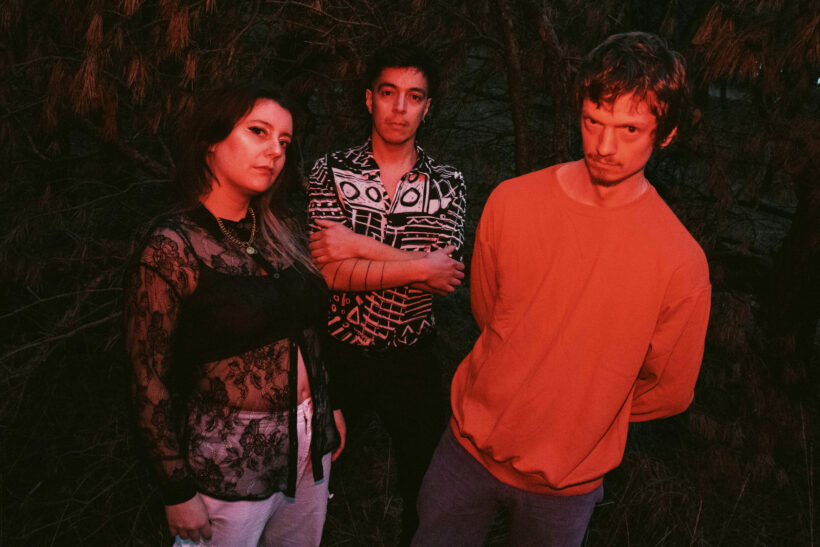
From touring across Europe to building their own DIY festival, Rats & Daggers singer Imara pours unapologetic rage and radical care into everything she does. Fresh off a hectic year of shows and the release of the EP Half Hanged via Laybare Recordings, she talks to us about the story behind Half Hanged Mary, the emotional toll and power of screaming on stage, opting out of the social‑media rat race, and why her Utrecht festival Beware of the Banshees is determined to make heavy music safer, queerer, and more inclusive. Interview originally conducted in Dutch.
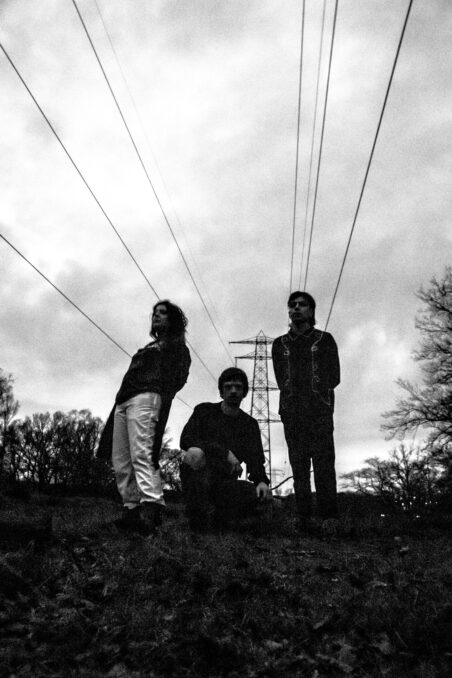
Welcome to Imara from Rats and Daggers
Well, first of all, I want to welcome you here. And then I want to ask you: how are you? And how is it going with Rats & Daggers? You were pretty busy with a big tour last year.
You’ve played in all sorts of corners of the Netherlands, but I didn’t manage to be at your shows. Maybe next time. So how are things now?
Yeah, I think things are going pretty well now. We’ve had a few really nice shows. This summer we’ll mostly be playing abroad, actually. We’re going to play in Belgium, Germany, and Poland. That’s the plan for the summer. We’re really looking forward to that. We’ve already been to Belgium and Germany once before, but never to Poland.
And of course we have the festival coming up: Beware of the Banshees in August. And at the end of this year we’re going on tour again. I think I can already tell you that, secretly. With Tusky. So that’s going to be really sick. We’re going to play a lot of shows with them, all over the Netherlands. For them it’s a release tour, and for us it’s tagging along. And besides that, we’re also really busy writing. Last year was very busy and we were a bit exhausted, so we didn’t write that much on the side. Now we’re playing fewer shows so we still have time left to write.
The latest release of Rats and Daggers: the EP Half Hanged
Of course. And speaking of writing: I’d like to remind you of something. The EP Half Hanged, which was announced in 2025, I think with Lay Bare Recordings. So I’d like to remind the readers how you worked on this EP, now that we’re almost a year after the release. What are your feelings looking back?
I think the main idea behind Half Hanged really came from Half Hanged Mary, also the single from the record. That’s really what it grew out of. What do we want to convey? What is a real Rats & Daggers song? And Half Hanged Mary, I really wrote for women, for people with feminine energy. It’s about Mary Webster. She was a woman in the 17th century in Massachusetts in America. She was just a smart, intelligent woman who helped the whole village.
But there was this suspicious mayor, and he thought his illnesses were caused by her. Every time he walked past her house, he blamed her, made her the scapegoat. He convinced the whole village, and eventually he said she was a witch. Everyone agreed. She even had to appear before a jury, somewhere far away. The jury ruled that she was not a witch. He still didn’t accept that. Then the village hanged her. She hung there the entire night and survived. Afterwards she killed the mayor and then disappeared for decades.
The story about Half Hanged Mary and its origins
I thought it was such a cool, but also such a sad and shitty story. It’s so powerful that she survived that, and it’s very characteristic of what women – and also other marginalized groups – have to go through, just by being who they are. And then there are people who can’t deal with that kind of loss of power, and they lash out. That’s really where the whole record came from.
It also came from a poem by Margaret Atwood. That poem is also called Half-Hanged Mary. The record is named after it. That was kind of the backbone of the record. The rest of the songs are also very much about dissatisfaction. How do you deal with that? What could you do about it? Especially in the past years – it’s been a bit more than a year now, I don’t know the exact timing by heart – you really notice with Mary that the audience picks up on it.
There’s a part in the song where I scream:
This is what you made
I became the thing you hate
I am the witch
And then we all scream it together. It really triggers something primal in people. And that’s very special to do together.
Rats and Daggers: Being raw and uncompromising
You know, I’ve always experienced Rats and Daggers’ music as raw and uncompromising. And Mary is exactly what I meant by those two words. But isn’t it also a challenge to be so raw and uncompromising?
I think it’s mostly hard after the show. I notice that people sometimes expect me to still be very intense after the show, while I’m actually calm and chilled afterwards. But during the performance it’s not hard at all. As soon as we start – also because the lyrics start very intensely, with:
“Shocker, someone is afraid” – from the moment I start singing, I get angry instantly. There is still so much to be angry about, even now, so it’s actually very easy to bring that emotion up. And I wouldn’t want to play it any other way, so I’m glad it doesn’t feel forced yet. So no, it’s actually quite easy to do, unfortunately, because I’d rather not be so angry at the world.
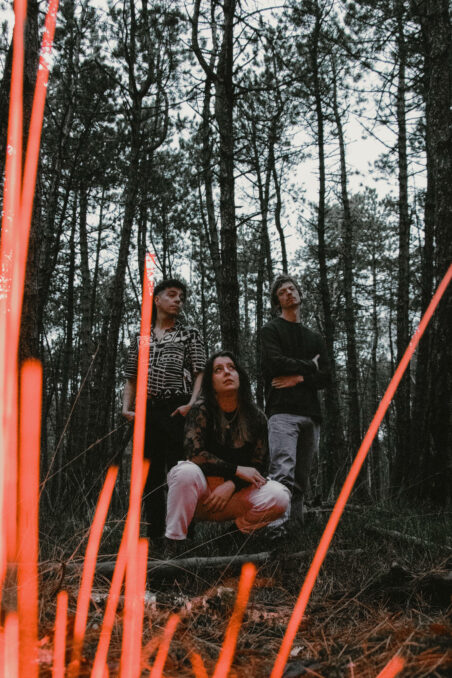
Rats and Daggers: “I am the witch, I am the witch“
Yeah, I totally get you. Also because, as they say in English, there’s a toll you pay for always being angry. I can imagine that always being that angry leaves you exhausted and tired, especially with a song like Mary. It’s very loaded with meaning, and you always have to be able to carry it, in a way. Give it a certain interpretation and weight, that’s part of a song like that.
Yeah, but it’s also very rewarding to sing that song. Just in the build-up to the bridge: I often sing I am the witch, I am the witch and then I ask people to sing along. And everyone sings along. You can feel such an intense energy. So yes, it takes quite a bit of energy to stay that angry, but at the same time you also feel love, strength, and resistance. It does much more than just evoke anger.
“I personally find that really disrespectful” how Spotify handles artists
Yeah, that’s true. And you know, another song I loved from Half Hanged was Blind. That’s also a very meaningful song.
If we then talk about promoting music: that’s pretty difficult. If you think about how Spotify pays artists almost nothing – I personally find that really disrespectful. There’s a lot of investment: first of all money, and second time. And then you have to constantly spam on social media, you have to plan and schedule content, you basically need a social media manager. And I feel like that way of doing things doesn’t really fit anymore. It also has consequences for how we enjoy music, I think. That’s kind of my position.
Yeah, I also think what’s so cruel about it is that it really does help if you’re very active on social media. You immediately notice that bookers, festivals, and people who share your stuff pick you up more. And that’s what sucks about it. Because before I had Rats and Daggers, I had deleted all my social media. I had this quiet, calm life in my head. And now, with Rats and Daggers again, you basically have to have social media as a band. You can choose not to, but then you really cut yourself off in terms of reach. That’s a really difficult balance.
Being social is a really difficult balance.
So last year, maybe the year before that, I posted a lot. And it worked really well. And you also see that some bands go much further with it: with TikTok-style reels and things that are very clickbait-y. That helps. But it really kills my soul. So I’m trying to do it less now, and only post when I actually feel like it, and not keep feeding the algorithm monster.
With Rats and Daggers we’re luckily far enough now that we have a stable number of followers, a stable group of people who find us interesting. Because of that, I want to feel less like I have to do everything. But I also think: how do you keep a healthy balance between the effort and the rest of your life?
Because if you look at it in general: all these social media things have become a huge obligation. It’s no longer just spontaneously showing once a week what you’re working on. It’s planning, planning, planning.
A hard choice
That has a big impact on your life, because you constantly have to share. So that’s also about balancing effort and video/image. My question is: how are you going to handle that?
Yeah, I really just do less now. Before, I think I posted at least two or three times a week – that’s what you’re supposed to do if you want to follow Instagram’s rules as well as possible. I gave up on TikTok right away, it just made me depressed. The videos they throw at you there are really weird, I don’t handle that very well. So now we only use Instagram. That might also be a bit of a generational thing: I’m not going to learn even more new platforms.
And we only post if there are shows coming up or if we have something fun to announce. Last week, for example, we had new socks made, which we’re very proud of, and this week we’re going to Belgium. Those socks turned out really great. I try to approach it more from: what do I actually enjoy doing? And then I’ll do that.
And with the festival, for instance: this year, for the first time, a friend of mine is completely helping us with social media. So I don’t have to get involved there anymore, which is really nice. It’s a real relief. I think you can tell from me when I say: I’m not going to deal with that anymore.
Rats and Daggers and Beware of the Banshees
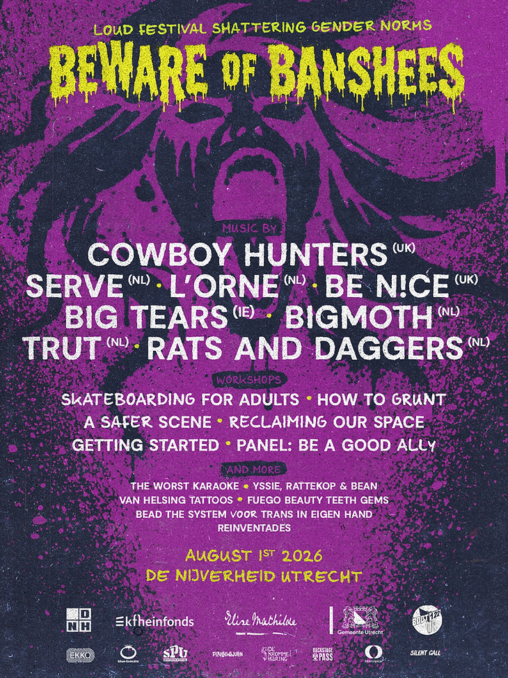
Yeah. So now I’d like to talk a bit about the festival. That’s Beware of the Banshees, and it’s already the fifth edition at De Nijverheid in Utrecht. So I’d like to ask you about this year’s line-up and how challenging it is to organize such a small festival. Because I recently read something in that regard: a poppodia had three sold-out shows in a row, but still ended up short in terms of money and funds.
So my question is: how do you find that balance between covering your costs and having fun?
Yeah, I think our festival is somewhere between DIY and not-DIY. First of all, Beware of the Banshees focuses on breaking gender norms. It grew out of my own need as a woman in a heavy band, where I was very often the only woman on the bill, almost every night. I thought that sucked. And it sets a bad example for young women or young genderqueer people who also want to do something. You very quickly get the idea that you don’t belong there. That’s where the festival came from.
Breaking gender norms with Beware of the Banshees
Later it grew to focus more on non-binary people as well. As someone who plays in a band, you know that sometimes you play DIY shows and sometimes more professional ones. We approach the festival the same way: we already have quite a network of heavy bands, which is great, especially bands with more gender diversity.
Important: the perspective of bands
We try to pay the bands as fairly as possible. This year, we applied for quite a few grant which we didn’t do that in the first few years. We agree with the bands in advance: do you want to do this, do you think it’s important? Then we offer at least a DIY fee, but we’ll try to raise as much funding as we can, and then you’ll get the maximum fee. So it’s much more from the perspective of bands that really want to take part and are okay with playing for this minimum fee. And that’s still not very little, because if you look at the whole band industry, it’s completely fucked up. You so often get paid very little. So we’re not doing that badly. But if we get a grant, the fee can be three times as high. That makes a huge difference.
The challenge
That’s something we work on a lot: how can we build it in such a way that with minimal means we can still have a really cool festival with great bands? And how can we use grants as a springboard to make something even cooler?
This year, for the first time, we got a grant for the cultural part, from the Elise Mathilde Fund. Now we can also offer really good workshops and organize an in-depth panel discussion, where we can actually pay the panelists. We couldn’t do that before. We’re trying to build that up more and more, step by step. I think we’re more cautious with this than a big festival would be.
But in previous years we also had no grant at all, and then my band and I personally took the financial risk if we didn’t sell enough tickets. Luckily that only happened once. We lost around 200 euros in total, which we can handle. But beyond that, I believe so strongly in this idea and in this festival that I’m okay with taking that risk. So it’s partly DIY and partly subsidized.
Working together with De Nijverheid
You know what I really like about the festival? That it’s done with a clear intention, and not – like many big festivals – mainly to earn as much as possible. I don’t want to speak badly of anyone, but if you compare your festival to a medium-sized festival here in the Netherlands: they have to earn a lot of money. They have so much hospitality, so many people working for them. Of course you have to pay normal salaries in hospitality. But if you think about how much risk you’re taking…
I really like that small-scale, DIY aspect of your festival. And people really enjoy helping out; that’s very nice. De Nijverheid is really a partnership. Now we do pay more; we’ve kind of grown together. For our first edition we didn’t have to pay anything, because they really believed in the idea. When things went better, we paid a small amount for the technical production. And now we pay the full technical costs. But it’s still really nice, and they’re very open to trying things out with us. It’s just great that so many people want to be involved.
Being critical with the system…
I also like that when a festival is so small-scale, you stay in real contact with people, with the bands, with the artists there. That’s an important part of the whole experience for me. I wouldn’t so easily pay extra for a VIP ticket, like you see now with almost every tour announcement. There’s something a bit off about that: I already give you 80 euros for a ticket and I still have to travel there. I think there really is something wrong in the whole system.
Yeah, I think in the past years people have taken culture a bit too lightly, and that’s still happening. Too little money is given to culture and music from the government, while it’s so important to inspire people, keep the creative spirit alive, offer new perspectives, and help people understand each other better. It’s actually pretty bad. There should be way more grants, because people don’t have that much money at their disposal in this day and age to try out lots of different things, even though that would be great.
The sliding scale system
Yeah, that’s true. And that’s why we’re now working with a sliding scale for the second year. A regular ticket is 25 euros, a budget ticket is 20, and a kind of bonus ticket is 30. You get the same thing for all of them; there’s no extra perk. But we ask people: how much can you afford?
I think that’s a very fair idea. Because it’s very sensitive: you can’t look into people’s wallets. I also think everyone should be able to enjoy culture, even if you’re at home and unemployed due to circumstances. Culture should be accessible to everyone.
Yeah, one hundred percent. And what’s really beautiful is that we’ve now sold around a hundred tickets, just over a hundred, out of a total of four hundred. Twelve cheaper tickets have been bought and twelve donation tickets. So people are really balancing each other out. That way we still have enough money to put on a good festival. The people who can spare a bit more help those who can’t. I think that’s really beautiful to see.
The line up festival and the panels
Would you like to recall the line-up that will perform at the festival?
No worries, I can quickly go through the bands. Besides the bands, we also have workshops: adult skateboarding, How to Grunt – that one is led by Cheyenne, who is also the singer in the band SURF. And SURF is playing as well; that’s a hardcore band from Utrecht, really sick.
We also have a panel about how to be a good ally to trans and non-binary people. We’ve got a workshop about how men can contribute to more safety in the streets. We have – let me think – some more plans, but a part of that isn’t confirmed yet. We’ll also be raising money with We Bead the System; they make protest bracelets. And we’ll have Worst Karaoke again, just like last year – that’s the most insane karaoke you can imagine.
The bands
And then the bands: we’ve got Cowboy Hunters, a kind of rave-punk band from England, really sick. Be N!ce, also from England, a sort of creepy punk band. We’re of course playing ourselves as well. Then we have Trut, a new post-punk band. They’re releasing their first EP next month – really great post-punk with a bit of a grunge vibe.
We have more: we’ve got Big Tears, a band of three trans women from Dublin. They call themselves Bubblegum Punk Trannycore, a bit of old-school rock, groove, surf vibes. I was about to forget the metalcore band SERVE. Lastly, We also have BIG MOTH, an up-and-coming metal band in the Netherlands, who also played in the Metal Battle.
Yeah, I know them. Yeah.
And then we’ve got L’orne, a really cool art-post-punk band, I think from Rotterdam, though I’m not entirely sure. Okay, that’s all the bands. Eight bands in total. It’s going to be really sick.
Some small acknowledgements
Well, it sounds like a really interesting line-up. I’ll definitely do a bit of research; I actually find everything interesting. I have to say, my taste in music is quite broad, though of course I have my own preferences, like everyone. But it really seems like a great line-up. Congratulations again.
Thanks, I’m very proud of it too. It’s going to be really great.
Some small acknowledgements [part 2]
That’s also worth mentioning, because looking at the names you just mentioned, there are also bands from abroad. And it’s not easy these days to bring someone over from the UK to the Netherlands.
But that’s exactly what we want: to mix more bands and make sure diversity spreads more.
Yeah, the thing is: you can’t make everyone happy. That’s also a problem. It’s a bit like fans who say, “I’m going to see that band for that one song,” and then this time the band chooses not to put that song in the setlist. It’s the same situation. I get it too: it’s complicated to find the perfect balance of bands.
Yeah, definitely. And the nice thing is that we really have a list of more than 300 bands with women, non-binary, or trans people in them, which I’ve collected. So other bookers: you have no excuse. There are plenty. Yeah, that’s right. And if one band can’t play, there will be another. That’s just how it is.
The next plans for Rats and Daggers
So, one more question. Since the festival is coming up in August, and you just said you’re also writing: what are the next plans for Rats and Daggers?
Yeah, I’m still very much in the middle of that, but I really like the idea – don’t hold me to it, because I don’t know if it’s going to work. I’d like to write a song with multiple female vocalists and then perform it during our set at Beware of the Banshees. I’d really love to do that.
I’m also working on a cool outfit, especially for Beware of the Benches. And we already have two songs that are pretty much finished and that are already going down well live. So that’s what we’re working on.
In terms of tours: right now you’re in a quieter period, right?
Yeah. We only have that tour in the summer, a mini tour abroad. And at the end of the year we’ll be touring again, together with Tusky.
Final words from Imara of Rats and Daggers
Imara, as I said before, I want to thank you for the time and detail you put into this conversation. I hope I asked everything. I’m here, but my brain is a bit empty now. I’m always afraid of forgetting something, so that’s why I always ask: did I forget anything? If so, you can just throw it in now.
In any case, I still want to thank you for your time, for the beautiful conversation, and for the interview.