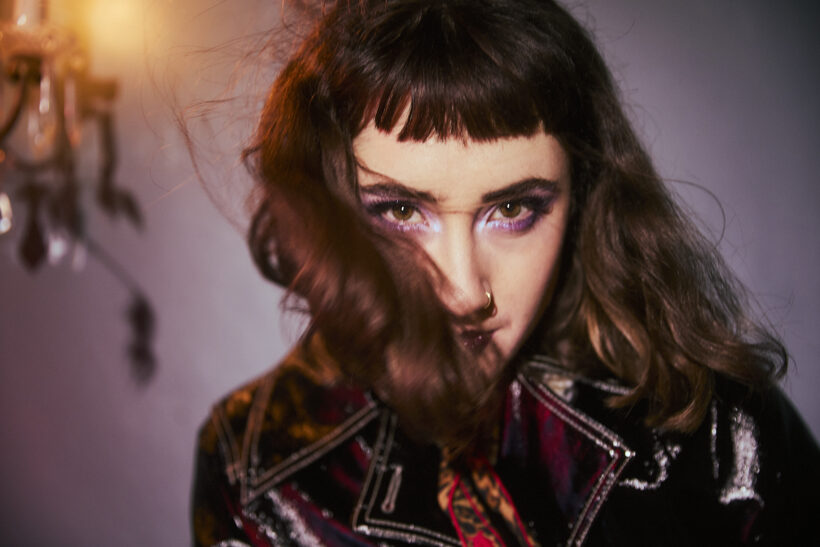
With Tell Me It’s a Dream out now via Transgressive, Rosa Walton opens a new chapter. While remaining one half of Let’s Eat Grandma, her debut solo album sees her exploring a more personal, guitar-driven sound, born from ideas first written during lockdown. Ahead of her first solo live shows, we spoke with Rosa about creative freedom, collaboration, and the journey behind an album that celebrates dreaming, curiosity, and embracing the unexpected.
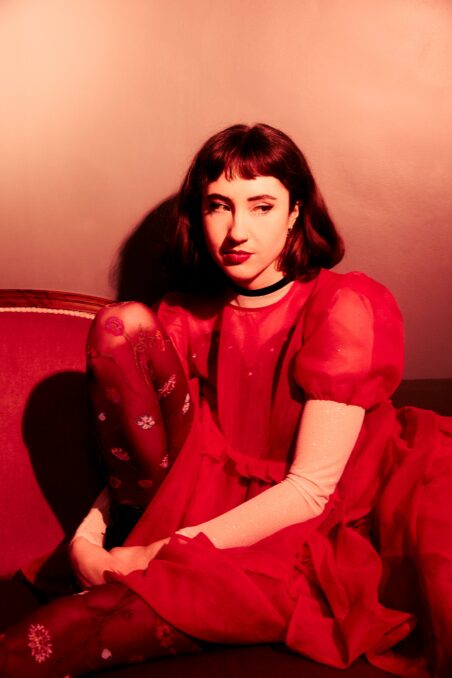
Welcome to Rosa Walton
First of all, Rosa, I wanted to welcome you and thank you for your time.
Thank you.
How are you, and how are you coping with the promotion?
Yeah, very good. I’ve got my first show tomorrow at The Great Escape in Brighton [which was back in May], which is very exciting. It’s kind of taking over everything in my head at the moment, which is good, because hopefully it means the show will be really good.
The solo album of Rosa Walton, Tell Me It’s a Dream
I’m also quite excited about Tell Me It’s a Dream because it’s a really great album. First of all, I wanted to ask you: when did you realise it was the right moment to fly solo, even if just temporarily? What triggered you to think, “I need to explore other musical endeavours and do this on my own”?
Yeah, I guess it wasn’t so much “I need to do this for myself,” but more that I had started writing these songs and they didn’t really fit into the Let’s Eat Grandma project. And this was a lot of years ago, back in lockdown in 2020. I just started writing songs then, and that was simply what I was doing at that time.
But the more I got into writing them and making the solo project, the more it felt like a chance to explore making a record in a different way. Because of working with different people, the whole process was different – starting to write the songs with Sam and then working with the band to record them.
Jenny and I have made three Let’s Eat Grandma albums together now, and we’ll go on to make more after this, but both of us need to keep changing our process of how we make music; otherwise it gets really repetitive and boring. So doing a solo project is just a chance to do that, really. And I really wanted to make a guitar record.
“So many different layers of meaning”
I also like what you said about the title – that the album is kind of like the title of your life, Tell Me It’s a Dream. I found it, in a way, innocent but at the same time very truthful, and I really like that. What keeps you dreaming? Because it’s difficult to keep dreaming in reality, especially considering how harsh reality can be.
Yeah, I don’t know. I think it’s just how I naturally am and how I naturally see the world. That title has so many different layers of meaning, and it will mean different things to different people. It has a lot of different layers of meaning for me as well. A lot of it is the way I walk around and see the world. A lot of the time I feel quite disorientated, and everything can be quite surreal and funny. So there are layers like that to it. I never quite know what’s going to happen next, and it all feels a bit surreal. Some situations could just be happening in dreams.
But then also there’s Tell Me It’s a Dream in the sense of being able to chase your ambitions and not be held back by the idea of people thinking they’re unrealistic. So there are lots of different layers to it, really.
Rosa Walton working with Sam E Yamaha and David Wrench
I also like the fact that you started working on this material with Sam E Yamaha during the COVID lockdown, and then you ended up co‑producing it with David Wrench. My big question is: from these two collaborations, what is the most important lesson you took from working with each of them?
Yes, that’s an interesting question. With both of those people, I’ve learned a lot of things, musically and in terms of life lessons. They’ve both shaped who I am as a person in different ways. Musically, Sam has a really strong ability to write a great song at its core that can then be translated into different styles. When we started writing them, some of the songs were more like synth‑pop, but because he’s so versatile as a songwriter and so good at things like structuring songs and understanding what makes a song good at its core, they could evolve.
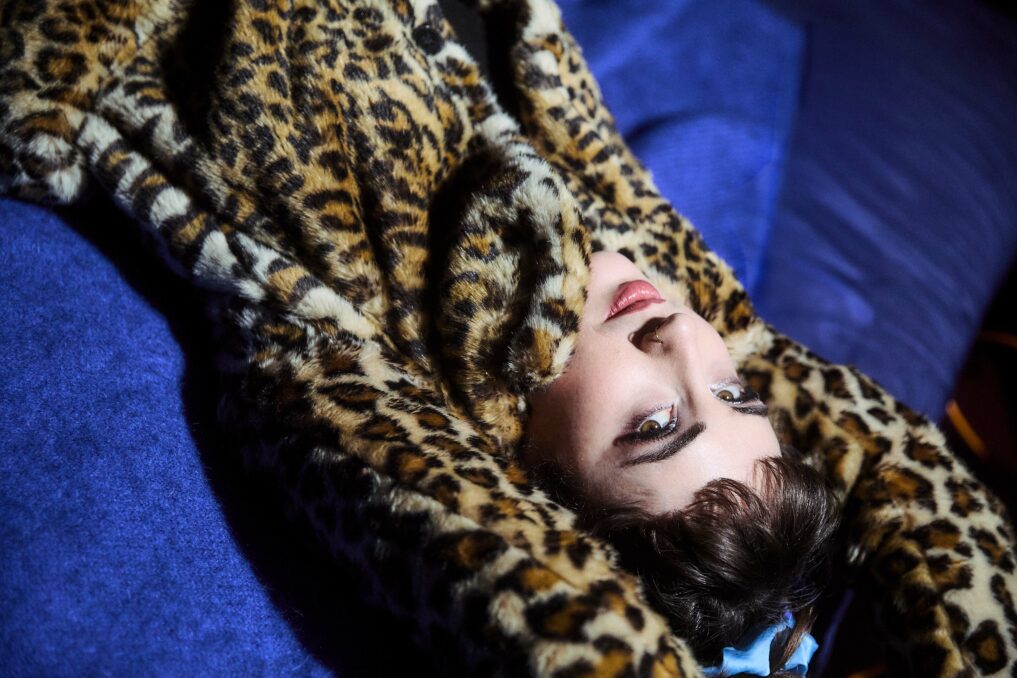
… and David Wrench
Right, I know you collaborated with both David and Sam. David is also your co‑producer, and he’s such a big name – he works with so many artists in the current music scene. I feel there’s always a life lesson that comes from this kind of collaboration, maybe something to carry into the future.
It’s funny, yeah. It’s funny because David and I are such close friends, and our friendship is the primary thing. So I often forget that he’s worked with all these big artists, because when we were making the record it was mostly just me and him in his studio, having a laugh and not thinking about, “Oh, this is going to be released,” or anything like that. Even David himself doesn’t really project that. Yeah, I don’t know.
Striving for ultimate freedom
I also like the idea that the album is about striving for ultimate freedom. That really resonates with me, because I often ask myself: am I really free? Do I really manage to strive for the best and reach that ultimate freedom you’re trying to explore with the album? How does it feel now, having this group of songs out in the world with that intention?
Yeah, I guess it’s something I’ve spent quite a lot of time thinking about. There’s a lot that holds us back as humans from being free, and I was thinking about what those things are. Songs are something I see as the ultimate freedom, and that’s linked to the album title. If you’re walking around with your headphones on, in a kind of dream, just listening to songs, I see that as an extension of your headspace. You feel something greater in a song, and that can feel like freedom when there’s a lot in the world that doesn’t. So I wanted to capture that in my songs and bring this message that striving for freedom is possible.
The cover artwork for the new album of Rosa Walton
Speaking of freedom, I also really like the cover artwork that you shot with Nico and Guy. You’re under the traffic lights, and the traffic light is green and you’re hanging from it. I thought, this also represents ultimate freedom.
Yeah, I’m hanging off it. That was, I guess, symbolic – that the traffic light is on green.
And it’s also interesting that we caught that exact moment when the light was green, because usually the green doesn’t last that long.
Exactly – and it’s been captured in the photo forever. It was a very last‑minute decision as well. We were doing the shoot out in the street, it started raining, and I hadn’t actually planned to hang off the traffic light. But I saw it and thought, “Oh, that would be really cool.” So I got up there. At first Rachel was like, “Oh, health and safety, get down, that’s really dangerous.” And then she realised it looked really cool and said, “No, actually, stay up there.”
Rachel (Rosa’s manager): I think sometimes the best photos aren’t planned and are quite spontaneous. With the album shoot there were so many signs in that photo that it should be the album cover, and I think that’s funny.
The cover artwork for the new album of Rosa Walton [part 2]
I agree. I mention it because it’s such a natural, unplanned pose. I noticed it straight away when I first saw the cover artwork – and also that the light was green. Usually you don’t plan a photo for the exact moment it turns green, because, as I said, green doesn’t last long. Like Rachel said, it really captures the mood of the album.
Yeah, I like the idea that you can just do what you want in the street. People are driving past in their cars; maybe they see you and think, “What on earth is that girl doing?” But why couldn’t you? Why not hang off a traffic light? Why don’t people do that? Why not?
Exactly. Why isn’t that something people do? It’s fun.
Yeah, until it gets unsafe – then it’s better not to do it. It did hurt my hands quite a lot, though. All part of it – suffering for the art.
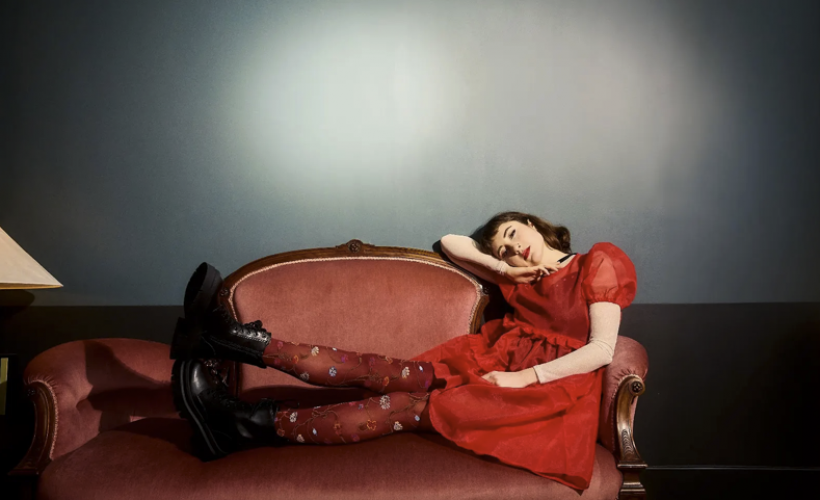
The upcoming plans
Now, you mentioned your first upcoming performance tomorrow at The Great Escape, then three in‑stores, and four UK dates. It’s starting to look quite busy. Are you also planning to come to Europe, or for the moment will you just focus on discovering the UK on your own?
Rachel: Definitely Europe in the future, and some possible festival dates. But for now we’re just starting this project with the standard rollout: in‑stores, The Great Escape as the first show, and then some headline dates in September.
Rosa: I’m so excited about playing live. I really like being busy and doing all of this.
Playing solo
I understand, and I’m looking forward to reading the feedback as well. But isn’t it a bit scary to play solo after so many years? It’s a real challenge: you’re putting your first solo album on the market, then going solo for the in‑stores, these four dates, and tomorrow’s show. Is that a challenge for you?
Well, I’m going to have my band with me, and they’re all really good friends of mine. Two of them I’ve played with before – actually three of them. There are different line‑ups for different shows, but I’ve played with these people on stage before and they’re close friends. So in some ways it doesn’t feel like I’m doing it by myself.
That was a big part of this project: having it feel like a band project. At no point did I think, “I want this to be all about me.” Having a solo project has allowed me to have that band experience, collaborating with other musicians. I want this to feel like a band show instead of a solo show, even though technically it is.
Closing words
Well, as Rachel said, I’m looking forward to seeing you in mainland Europe soon. I’m crossing my fingers for you for the UK dates – tomorrow, the in‑stores, and the four dates in September. Thank you for your time, Rosa. I hope you enjoyed this and that I asked everything I should. Thank you again for your availability.
Rosa: Ah, thank you so much for speaking.
Rachel: You’re welcome. Thank you very much – great questions.